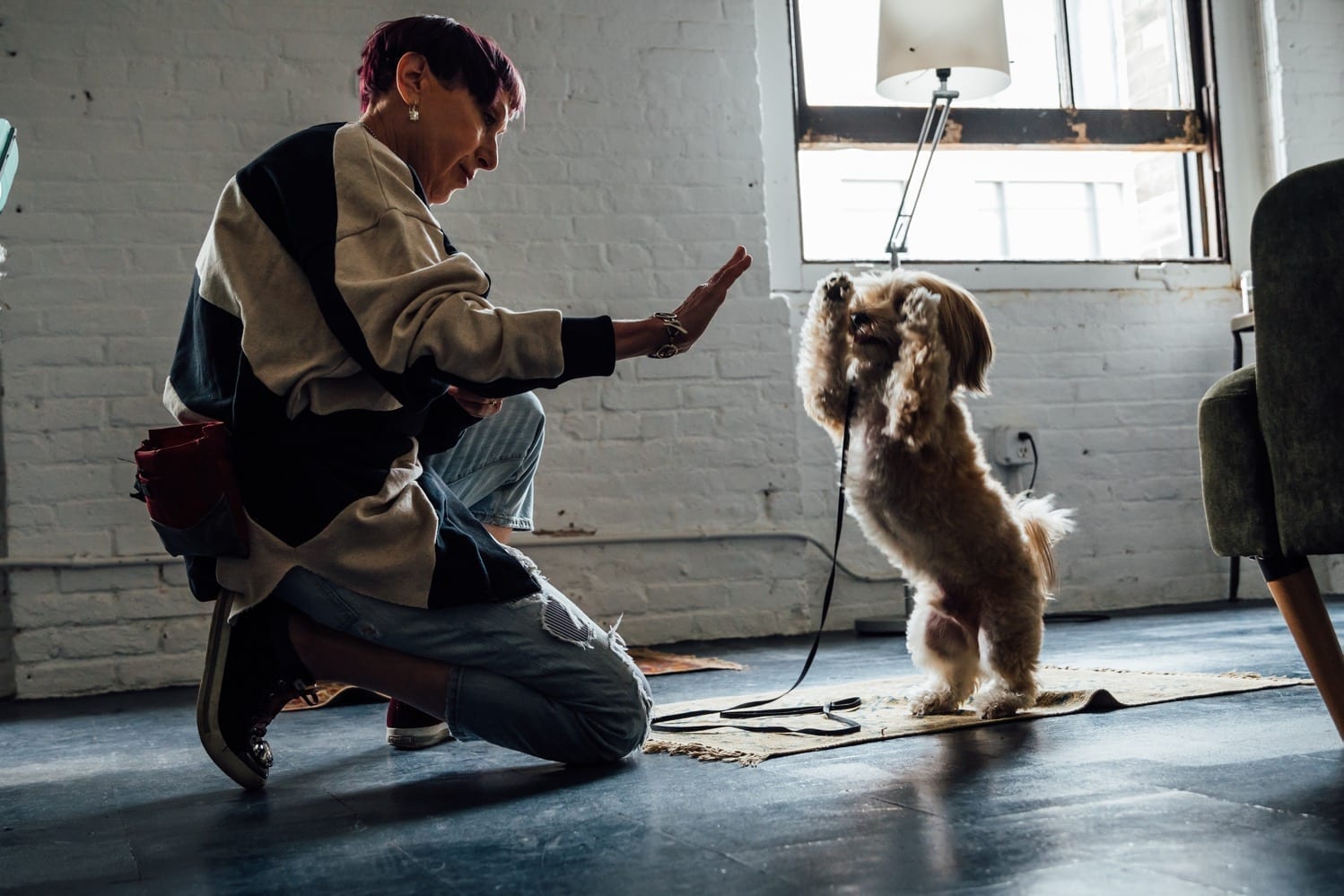
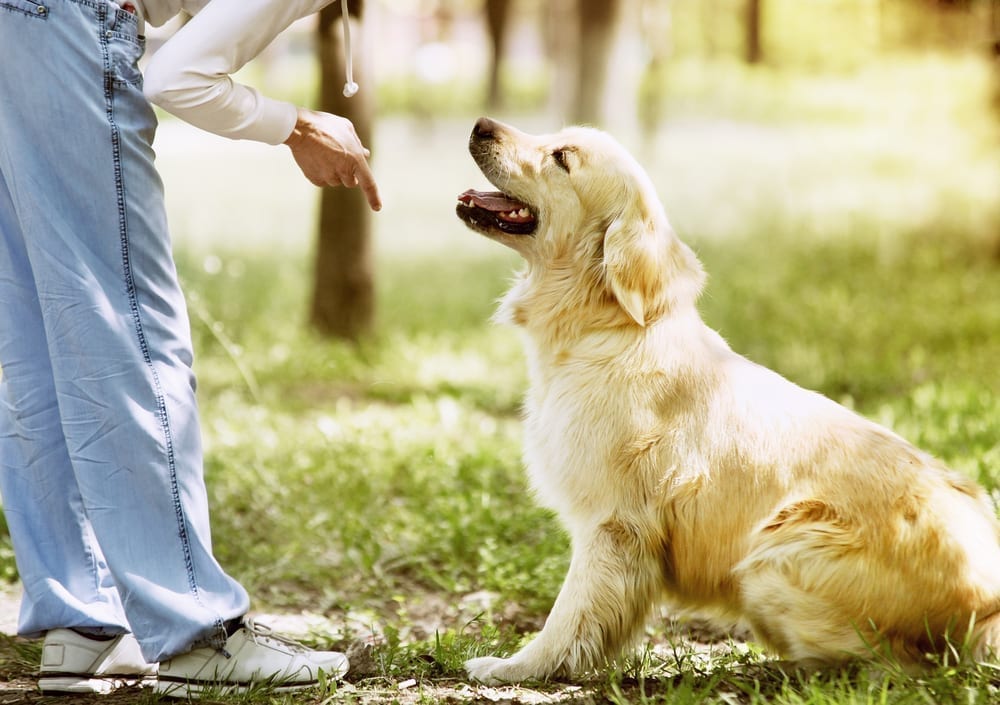
Have you come across this senario: You are walking down the street and you ask your dog to perform some kind of task, for instance: sit and give paw to a person who is interested in meeting your dog. The first reaction you see is delight on the stranger’s face. The second reaction : Oh I see, you are giving him a treat! No wonder he is doing that!
Well, of course I am rewarding my dog for being good. What does that have to do with spoiling of bribing? I am rewarding this behavior because I want my dog to know that I truly appreciate his actions and I want him to know that he gave us pleasure and I want it to be fun and pleasurable for him as well. And so he will happily “give paw” or “wave ” to strangers when I ask him because he thinks it is fun too.
Kathy Sdao’s book very sensitively points out the fine line between coercion and eliciting voluntary behaviors. How the NILIF principle pushed to extremes actually can become coercive as well. I actually had been unaware of the fact that some trainers use the principle of “nothing in life is free” to the point where the dog has to earn every sip of water and, in marine mammal training sometimes even the air to continue breathing.
Kathy points out that instead of NILIF she asks her clients to reward their dog 50 times a day for behaviors that they want to reinforce, reward, cultivate…whatever you want to call it. I realize that I actually do that with my dogs. I reward them for being calm while I am typing this (excuse me ..I just had to walk over to them and give them each a morsel of chicken!).
It is a quiet, calm and joyful way of eliciting desired behaviors.
I highly recommend this book. I am not at all religious the way Kathy Sdao is
but I wholeheartedly agree with her that communicating with a dog in this way and teaching a dog what we want rather than correcting what we do not want is a mutually gratifying experience that allows the canine/human relationship to become infinitely more intimate.
Do you remember the story of June, the rescue mini dachshund with the megaesophagus? Yesterday I got a text that June was able to stay alone without any signs of anxiety or barking for a whole hour! It is an excellent example demonstrating that separation anxiety is largely a function…
I can’t touch her ears! She hates the brush! He shakes on the way to the groomer. Isn’t it an oxymoron that on one hand we “spoil” our beloved dogs with the fanciest beds and coats, find the greatest joy in giving them a toy they love to play with…
We now have a studio! The home-like atmosphere of the studio allows us to teach dogs and puppies manners that will transfer easily when they are back home. Sessions at the studio can be tailored to your needs. New services by Dog Relations NYC: Park and Train & SpaDoggy Would…
My dog is stubborn! He doesn’t listen! Wait….really? Maybe the “stubborn” behavior is the result of your own behavior. Maybe you have inadvertently sent out messages that reinforce the dog to be “deaf”. Don’t underestimate the power of intermittent reinforcement! If you reinforce a dog’s behavior in some way, he…
I frankly was not aware of Ian Dunbar’s theory that the playtime before puppy class where the pups are allowed to run free was to teach them bite inhibition. I always knew that bite inhibition was taught much earlier, when the pup was still with his mom and litter mates.…
Just because you say it, doesn’t mean it’s going to happen I think one of the biggest misconceptions people have about a dog’s learning process is that they think the dog can conceptualize new verbal input. Let’s take the famous “sit” example. What actually makes the dog understand “sit” and…
When I am out walking my dogs I try very hard to act like a “normal” dog owner and not a trainer. But tonight I experienced something that was deeply disturbing to me. I was walking Zeldi and we ran into a sweet young Labradoodle. They clearly were interested in one…
Let’s be practical here. As much as you would like to shape behaviors but not force the dog by molding or yanking (an example for molding would be: putting the dog into a sit position by pressing on his butt until the butt hits the floor) or teaching a sit stay…
Most of us have heard of the behavior exercise : Leave it! When the skill is learned the dog will turn away from an object he desires voluntarily because this action has been highly rewarded in training set ups. Here is a version of this game I thought would be…