Reinforcement at the right time can help you and your dog!
Using management can be a valid teaching pathway for both you and your dog. Essentially, you can build a reward history in your dog by associating great outcomes with specific events and circumstances.
Ideally, we control the dog’s environment in such a way that makes undesirable behavior less likely. As much as we might wish so, we do not have a magic wand to wave that allows the dog to understand how we would like him to behave.
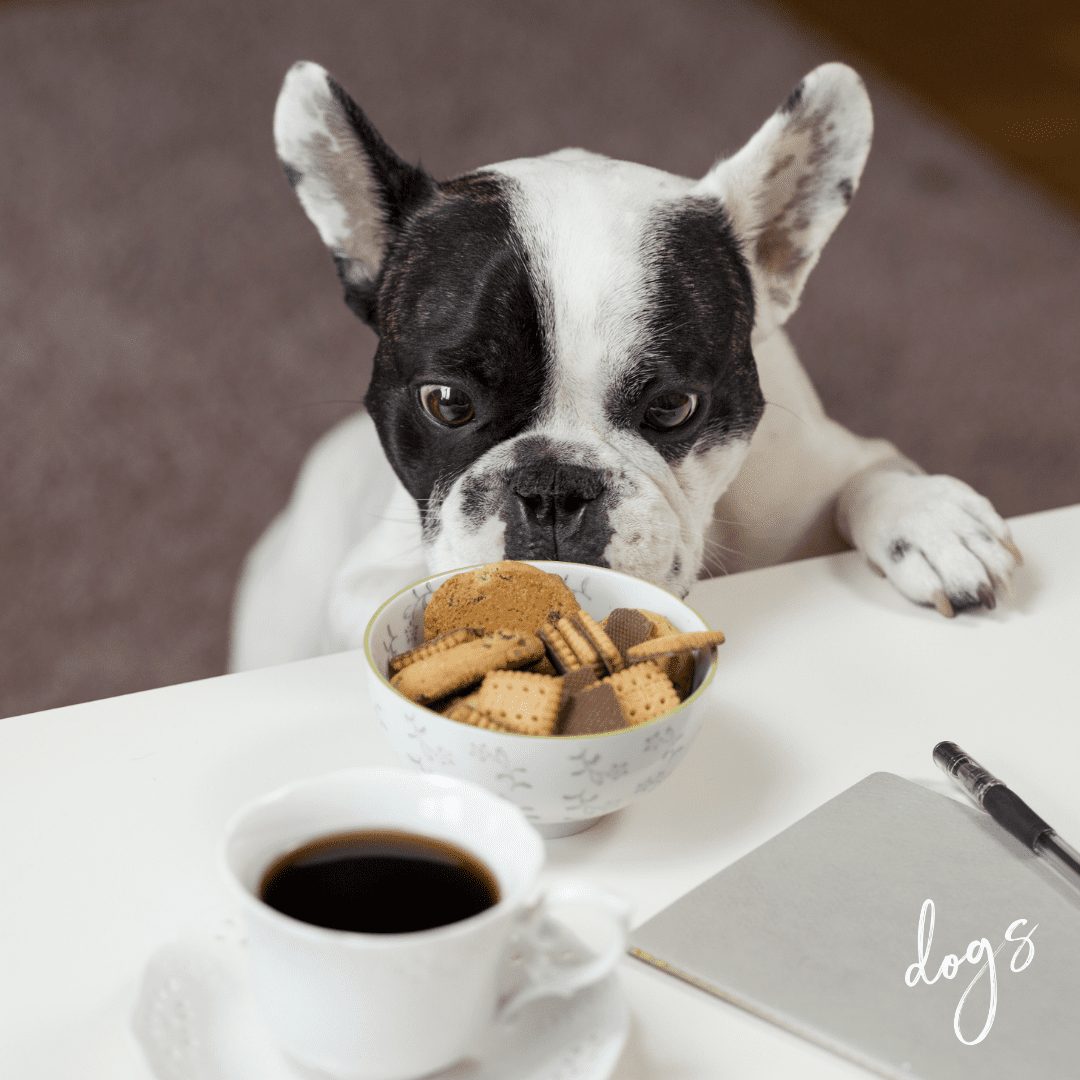
For example, let’s say all of a sudden your puppy notices that when you have dinner, there are deliciously wonderful smells emanating from the table top and of course he wants to explore and devour the aromatic foods up there. That is perfectly natural. After all, wouldn’t you?
But luckily someone in your life has taught you a certain amount of impulse control, also known as manners, that allowsyou to gracefully wait until (through some learned social signal) it is OK to take one of those freshly baked brownies or taste that delicious cheese.
Your dog, however, does not yet have the necessary social skills to cope with the temptations that set off the “bad” behavior.
Until that time, it is a great idea to help your puppy by not tempting them in the first place!
Remember, timing is of the essence. If you wait for the dog to bark, whine, jump up and then decide, “oh we better put him in the crate with a nice stuffed toy!” You are reinforcing a chain of behaviors.
The most important thing in behavioral training is to help the dog not to feel compelled to perform an undesired behavior.
Your dog learns that barking/jumping/whining will get him attention and then something nice to lick! He learns that quicker than you think and so the behavior chain will be reinforced.
With a little attention to forethought, you can “manage” this or any other problem behavior.
If your treat delivery becomes part of a routine and happens before the dog starts to beg/jump/whine, you will teach your dog to run to his “spot” or bed directly because setting the table becomes a predictor or cue that something great and rewarding will appear there. Running to the bed becomes a self rewarding action and barking/whining/jumping doesn’t even enter the picture. dogrelations.tempurl.host
Reward Placement I talk quite a bit about reward placement and delivery (thrown, rewarding directly to the dog, or on the floor in front of the dog, etc.); but I have not thought about clarifying the aspect of the timing of the reward. Reward Timing Here is a good example: …
Common Puppy Behavior Challenges I often receive inquiries from people who are frustrated with their puppies’ overall behavior. “They don’t listen” “they jump” “they bark” “they pull on the leash” are very common complaints. Teaching Your Puppy Essential Skills I will then ask a couple of questions along the lines…
All reinforced behaviors will increase in frequency in the future. This includes behaviors the puppy finds reinforcing simply because they work in their favor or they are simply self-reinforcing because they are fun. For the latter great examples are barking and jumping. Barking and jumping very often get the puppy…
The real voyage of discovery consists not in seeking new landscapes, but in having new eyesMarcel Proust Dog “Training” is evolving at an astonishing pace and in fascinating discoveries. It is fascinating to me how science does not just work mechanically but how it can open us up emotionally and…
This is the perfect story of why training helps a dog be a good dog and makes life easier for them. I received a call from a woman who said she needed help with her six-month-old Malamute. Read more!
Just like traffic flows in waves I find that dog behavior topics seem to come up in waves. The cases I’ve dealt with are all about multiple dog households. Recognizing Your Dogs’ Insecurities So the first example is about a household with three pugs ranging in age from geriatric to…
Let’s get this out of the way: in the debate of collar vs harness, I believe – as a professional dog trainer – that harnesses are clearly a better option than collars. Yes, dogs have worn collars for millennia, but does that make it right? At this point in my…
What do You Expect from Your Puppy? In your mind, you paint a picture of all the things you’d like to do with your dog, the way your dog is going to interact with you, and the wonderful relationship you will enjoy. When you have that image in mind, you…
How do you feel when you are either ignored or told what to do? When you do not have control? Speaking for myself: I don’t like it at all. Realizing that I am going to have to find a way to occupy myself after seeking a conversation and finding the…