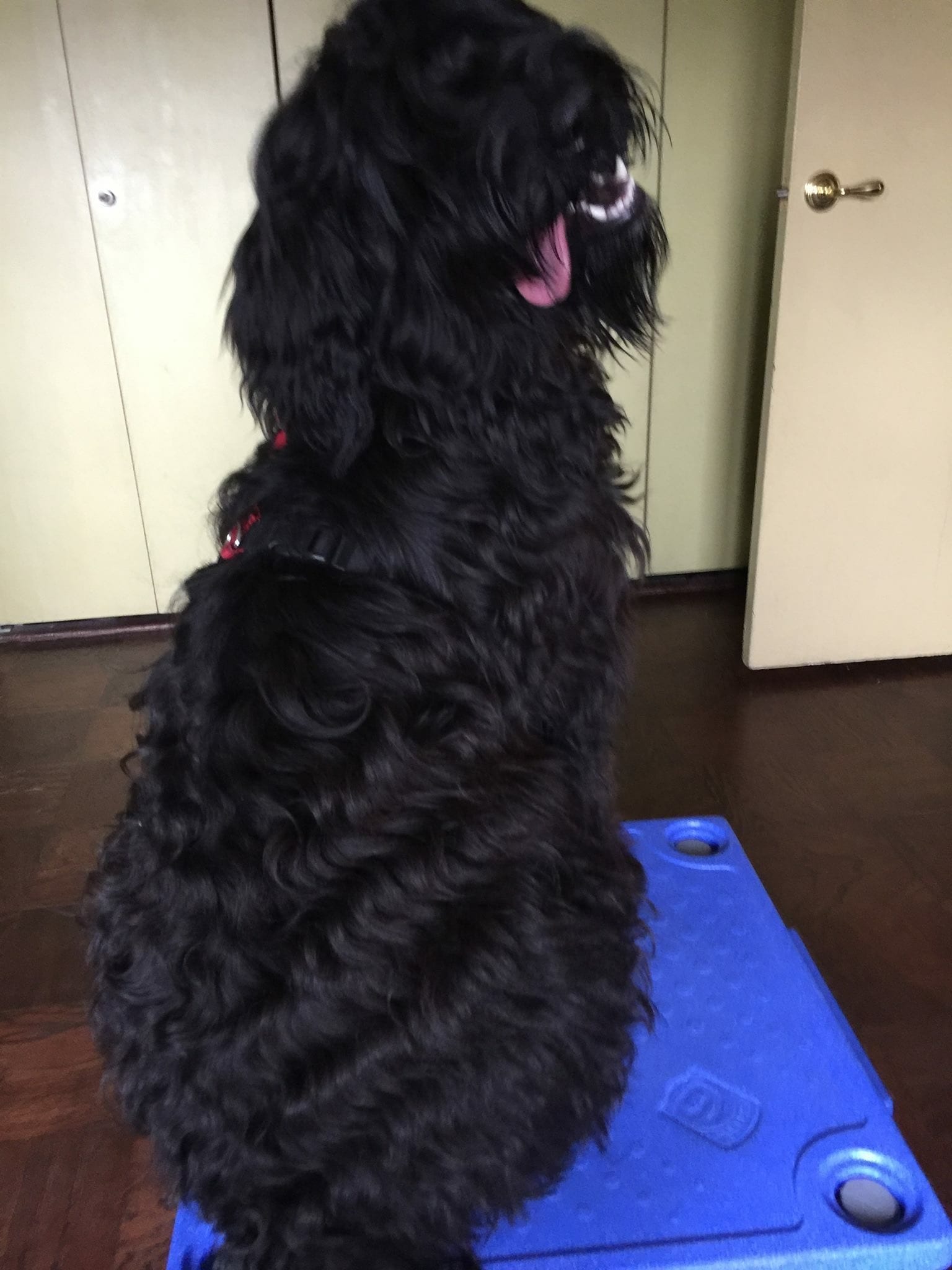
The way dogs learn to understand our verbal utterances is by associating a physical behavior with a specific sound combination the human emits. For example dogs can learn quickly that when their butt hits the floor and they hear the human utterance “SIT”, that “SIT” logically must mean “this position where my butt hits the floor and I look up at my human”…because human is pleased and most importantly I have caused the human to be happy and I get treats, toys and lots of attention when the timing is right.
Dogs do what works in their favor, so once they know what to do they will hardly ever fail to comply willingly. And why not? Who in their right mind would turn down the opportunity to get something wonderful for such a small and easy action as offering a “sit”?
So the learning process would be:
Get the behavior first by luring or signaling the dog with body language, hand signal and treat or toy.
After you get the behavior reliably add the verbal cue “sit”
Fade the body language/lure as you say “sit”
Practice in different environments and positions
The dog most likely will be able to understand the word “sit”
That is all good.
However here is the sticking point. How many times have you seen the dog touch the floor briefly and then get up again? It is a problem with all duration behaviors. How will you be able to explain to the dog that sometimes you want the dog to sit for 10 seconds and sometimes for much longer?
One solution I find very useful is to teach a release cue. You can use a gesture at first, a movement that invites the dog to release the current behavior and reward the dog when he or she releases the position on cue.
So at the same time as highly rewarding the duration behavior makes the action of waiting very rewarded, the release cue becomes the signal to announce that the time is up and it is time for the next (rewarded) behavior. It helps create a zen like state for the dog because the dog expects to get the magic word of “free” “all done” or “okay” or hears another cue like “come” to define the length of the current behavior.
Clarity like that will make a dog feel very secure and help build trust in the human canine relationship. At the same time as a insist on precision I would like to emphasize that all this can be taught in a friendly, encouraging and fun atmosphere.
Reward Placement I talk quite a bit about reward placement and delivery (thrown, rewarding directly to the dog, or on the floor in front of the dog, etc.); but I have not thought about clarifying the aspect of the timing of the reward. Reward Timing Here is a good example: …
Common Puppy Behavior Challenges I often receive inquiries from people who are frustrated with their puppies’ overall behavior. “They don’t listen” “they jump” “they bark” “they pull on the leash” are very common complaints. Teaching Your Puppy Essential Skills I will then ask a couple of questions along the lines…
All reinforced behaviors will increase in frequency in the future. This includes behaviors the puppy finds reinforcing simply because they work in their favor or they are simply self-reinforcing because they are fun. For the latter great examples are barking and jumping. Barking and jumping very often get the puppy…
The real voyage of discovery consists not in seeking new landscapes, but in having new eyesMarcel Proust Dog “Training” is evolving at an astonishing pace and in fascinating discoveries. It is fascinating to me how science does not just work mechanically but how it can open us up emotionally and…
This is the perfect story of why training helps a dog be a good dog and makes life easier for them. I received a call from a woman who said she needed help with her six-month-old Malamute. Read more!
Just like traffic flows in waves I find that dog behavior topics seem to come up in waves. The cases I’ve dealt with are all about multiple dog households. Recognizing Your Dogs’ Insecurities So the first example is about a household with three pugs ranging in age from geriatric to…
Let’s get this out of the way: in the debate of collar vs harness, I believe – as a professional dog trainer – that harnesses are clearly a better option than collars. Yes, dogs have worn collars for millennia, but does that make it right? At this point in my…
What do You Expect from Your Puppy? In your mind, you paint a picture of all the things you’d like to do with your dog, the way your dog is going to interact with you, and the wonderful relationship you will enjoy. When you have that image in mind, you…
How do you feel when you are either ignored or told what to do? When you do not have control? Speaking for myself: I don’t like it at all. Realizing that I am going to have to find a way to occupy myself after seeking a conversation and finding the…