I have great admiration for trainers who work with non-domesticated animals. I just love to see a walrus open their mouth on cue to have their tusks measured or see an elephant place their giant foot on a stool to have their nails done. All done voluntarily on the animal’s part.
Losing My Dog’s Trust
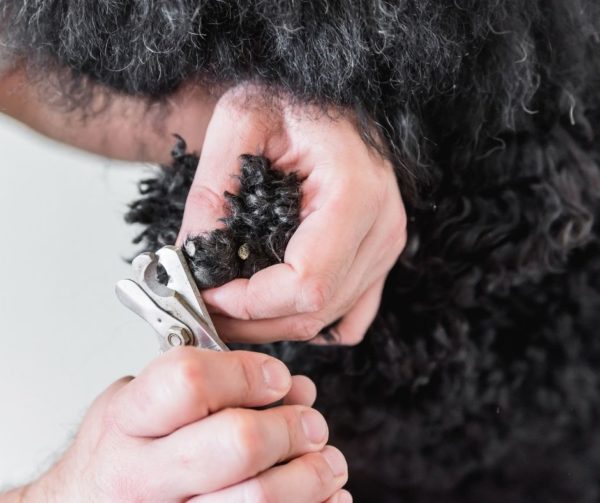
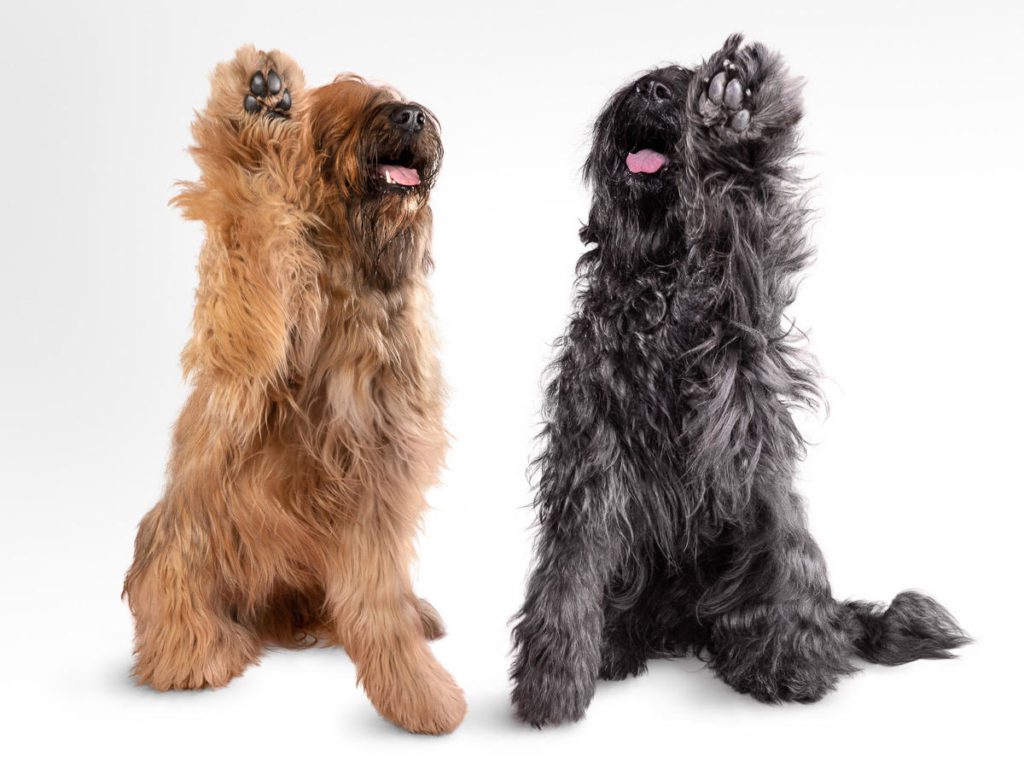
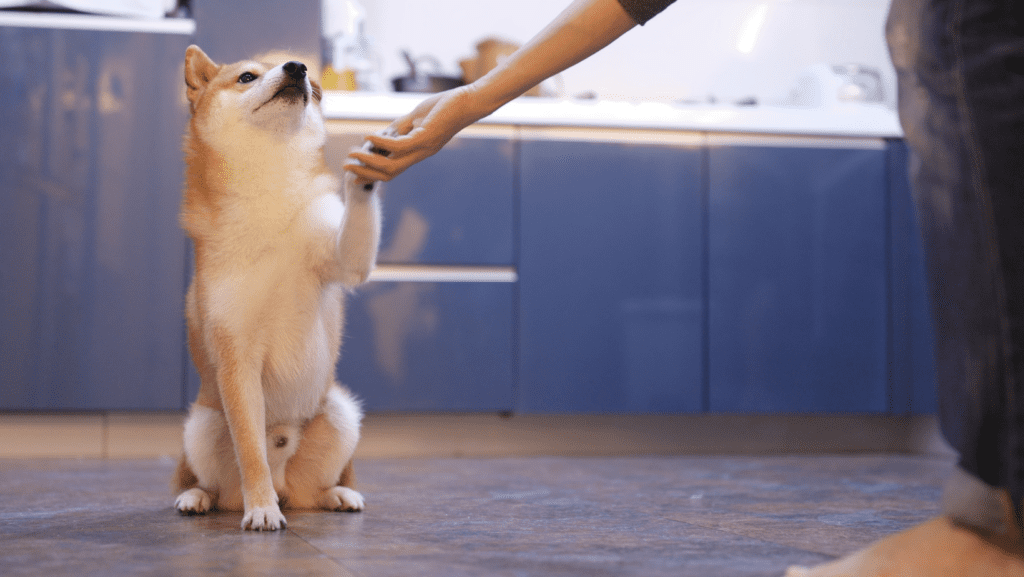
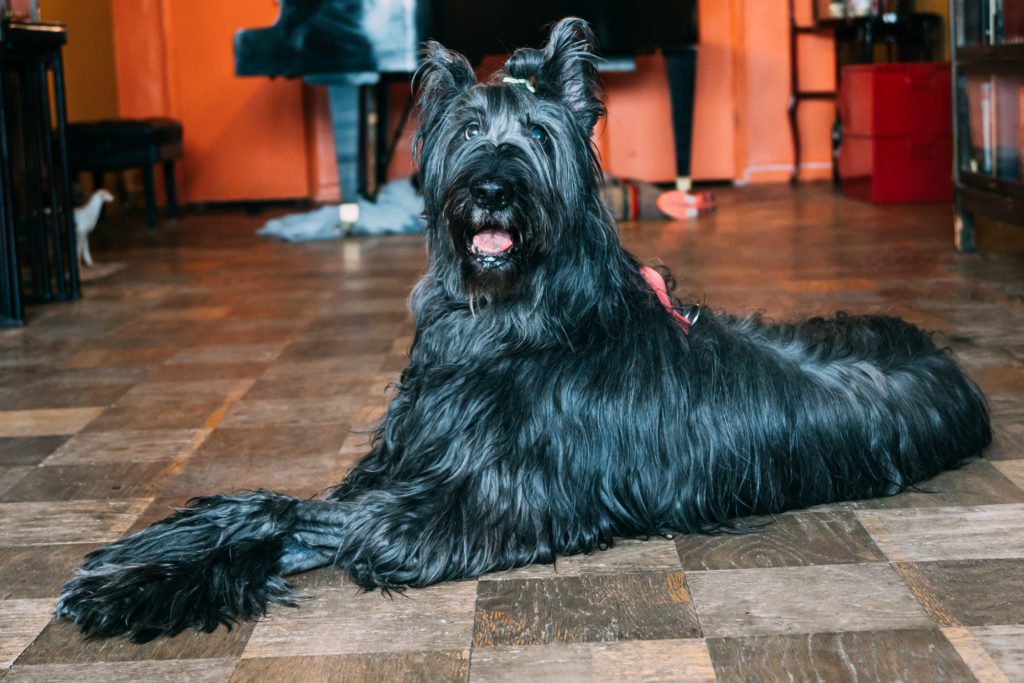
I have two dogs, Briards, who have lots of hair and double dewclaws. When they were puppies, I habituated them to getting brushed, nails trimmed, etc. I never really had a considerable problem grooming them UNTIL a local veterinarian manhandled them for a procedure.
Needless to say, this was extremely unfortunate because all of the sudden that wonderful trust was replaced with panic. Literally, I could not even touch their paws anymore. They would run away in horror.
Taking Matters Into My Own Hands
I decided though that I really ought to be able to handle this. After all, I should know how to do this. But I ran into difficulties. The fear of being touched was so great that I dealt with many errors.
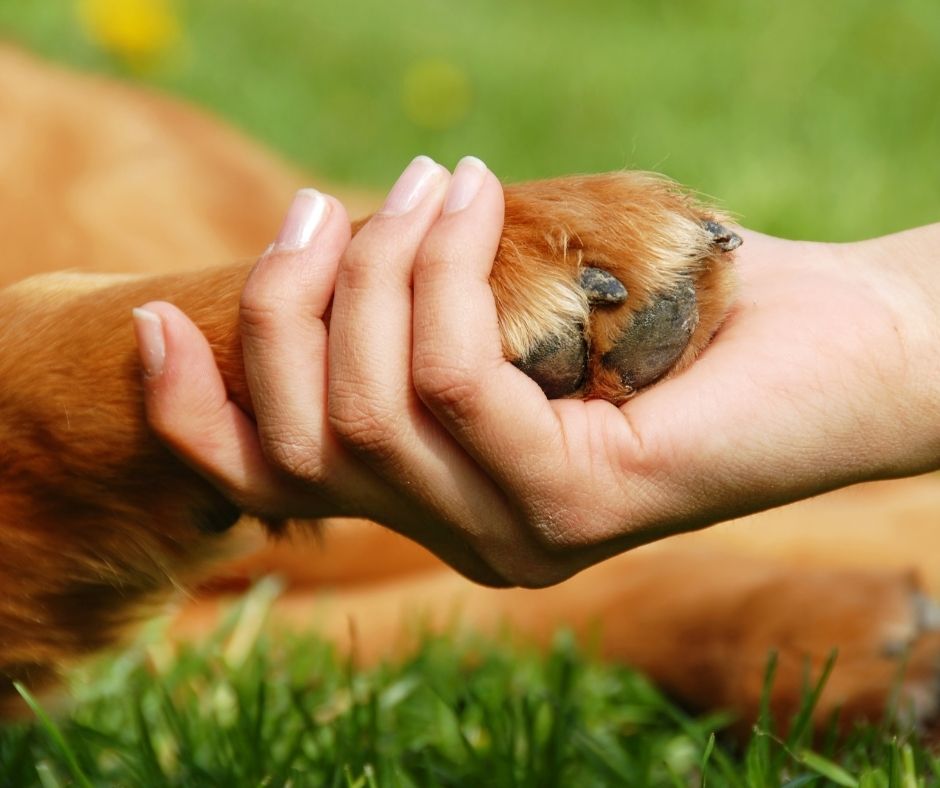
Yes, they would offer the paw but withdraw so suddenly and unexpectedly that I could not get any duration in order to actually comb, or I would be able to touch with the brush or the scissors but again, too many quick withdrawals and so my timing of the reward delivery must have been off: somehow.
What was I doing wrong?
Then I remembered watching a couple of demo videos that Mary Hunter of BehaviorExplorer.com posted and how I observed that she started the teaching process to get a duration behavior one preparatory step earlier than I would have.
In other words: I guess I tended to take too much knowledge for granted as my teaching starting point. At first, it struck me as “interesting.”
But then, as I was trying to analyze why on earth I could not successfully counter the bad experience Snorri had and offer his paw voluntarily for me to groom and handle it without withdrawing it in a panic, a lightbulb went on: I needed to make the “hold/touch/handle” increment so short and tiny that I would be able to reward him for that tiny split second.
Lightbulb Moment: Communication, Trust, and Love
So, I rewarded him for the shortest amount of time while still successful. AND WOW! Suddenly, Snorri understood that it was not the renewed offering of the paw I was concerned with but the permission to handle the paw. Of course, this seems obvious in hindsight, but frankly, it was a great revelation to me.
So, if you read this and think: OMG, but I don’t have the patience for that, let me assure you that having experienced making Snorri understand and actually getting the core duration behavior was inspiring and self-reinforcing. The progression was so much more efficient and fun for both of us. We figured things out together. And really, that’s what it is all about—communication, trust, and love.
I am very excited to learn more about errorless learning, and I will be happy to share my experiences with you.
BEING MINDFULI always think that the best way to “train” a puppy is by reinforcing them in time. Of course, that requires us humans to be mindful enough to notice and observe our dogs just as they observe us. So often, I hear people say that their dog has trained…
Challenging Size Stereotypes: The Importance of Training Small Dogs Dogs’ intelligence and prowess are all too often measured by their size. Generally, it is assumed that larger dogs need to be “trained” just because of their sheer size. Sure, a Rottweiler can cause more damage than a chihuahua. But is…
Let’s Say You Have a Persistent Behavior Issue With Your Dog: I hear these complaints worded in such a way a lot… Fill in the blank: “When I want them to ____” “when we say____”, “when they see____”, “when they hear____” “When they are _______they do not _____” “What should…
Reward Placement I talk quite a bit about reward placement and delivery (thrown, rewarding directly to the dog, or on the floor in front of the dog, etc.); but I have not thought about clarifying the aspect of the timing of the reward. Reward Timing Here is a good example: …
BEING MINDFUL I always think that the best way to “train” a puppy is by reinforcing them in time. Of course, that requires us humans to be mindful enough to notice and observe our dogs just as they observe us. So often, I hear people say that their dog has…
Recently, I have seen a noticeable rise in the use of prong collars and choke chains on dogs and even tiny puppies. I find this trend deeply concerning and feel compelled to raise awareness about the cruelty of these devices. Consider the perspective of an excited puppy: “I want to…
I am pleased to share some exciting news. I was recently featured in not just one but two articles in NYMag’s renowned column, “The Strategist.” These articles, “10 Best Chew Toys and Treats for Teething Puppies” and “11 Best Dog Harnesses,” have allowed me to share some of my favorite…
All reinforced behaviors will increase in frequency in the future. This includes behaviors the puppy finds reinforcing simply because they work in their favor or they are simply self-reinforcing because they are fun. For the latter great examples are barking and jumping. Barking and jumping very often get the puppy…
This is the perfect story of why training helps a dog be a good dog and makes life easier for them. I received a call from a woman who said she needed help with her six-month-old Malamute. Read more!